

Dinitolmide
High-Purity Dinitolmide Reference Materials for Accurate Residue Analysis
Ensure precise and reliable residue analysis with HPC Standards GmbH's high-purity Dinitolmide reference materials. Our products meet international quality requirements and the highest industrial standards, essential for laboratories conducting food and environmental analysis to ensure compliance with regulatory limits.
Filter
| Produkt | Bild | Artikelnummer/ CAS-Nr. | Füllmenge | Preis | |
|---|---|---|---|---|---|
| Dinitolmide | 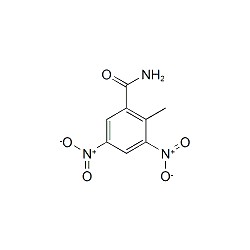 | 676731148-01-6 | 1×100 mg | Bitte anmelden | |
ISO 17034 Reference Material D5-Dinitolmide | 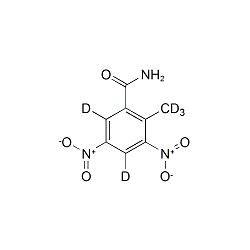 | 6797001596379-06-4 | 1×10 mg | Bitte anmelden | |
ISO 17034 Reference Material 15N3-Dinitolmide | 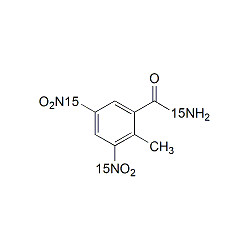 | 690470 | 1×5 mg | auf Anfrage | |
ISO 17034 Certified Reference Material 15N3-DinitolmideKonzentration: 100 µg/ml Lösungsmittel: Acetonitrile | 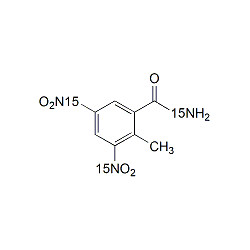 | 690488 | 1×1 ml | auf Anfrage | |
ISO 17034 Certified Reference Material D5-DinitolmideKonzentration: 100 µg/ml Lösungsmittel: Acetonitrile | 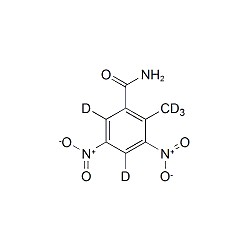 | 6907781596379-06-4 | 1×1 ml | auf Anfrage | |
Dinitolmide
High-purity reference materials for accurate and reliable residue analysis of Dinitolmide.
Overview
Dinitolmide, also known as 2-Methyl-3,5-dinitrobenzamide or Zoalene, is a chemical compound primarily used as a fodder additive for poultry to prevent coccidiosis infections.
It is commonly sold under trade names such as Coccidine A, Coccidot, and Zoamix.
Uses
Dinitolmide is added to poultry feed in doses of 125 ppm (preventive) or 250 ppm (curative). It is a broad-spectrum anticoccidial drug that prevents seven main strains of Eimeria coccidium.
It is also used to prevent coccidiosis in domestic rabbits.
Regulatory
Dinitolmide leaves no residues in tissues, making it compliant with various regulatory standards for food safety.
Monitoring
Regular monitoring of Dinitolmide levels in feed and tissues is essential to ensure compliance with safety and regulatory standards.
Health Impact
Human Toxicity
Exposure limits are set by NIOSH, with a recommended exposure limit (REL) of TWA 5 mg/m3. There are no permissible exposure limits (PEL) or immediate danger (IDLH) levels established.
Environmental Impact
Effects on Wildlife
Dinitolmide is used in controlled doses to minimize any adverse effects on wildlife and the environment.
Safety Measure
Proper handling and usage guidelines should be followed to ensure the safety of both humans and animals.
Analytical Standards
HPC Standards GmbH provides high-purity reference materials for Dinitolmide, ensuring accurate and reliable residue analysis. Our products are tested according to international quality requirements and meet the highest industrial standards.
These reference materials are essential for laboratories conducting food and environmental analysis to ensure compliance with regulatory limits.