

Fenthion
High-Purity Fenthion Reference Materials for Accurate Residue Analysis
Ensure precise and reliable residue analysis with HPC Standards GmbH's high-purity Fenthion reference materials. Our products meet international quality standards, supporting laboratories in food and environmental analysis to comply with regulatory limits.
Filter
| Produkt | Bild | Artikelnummer/ CAS-Nr. | Füllmenge | Preis |
|---|---|---|---|---|
ISO 17034 Certified Reference Material FenthionKonzentration: 100 µg/ml Lösungsmittel: Acetonitrile | 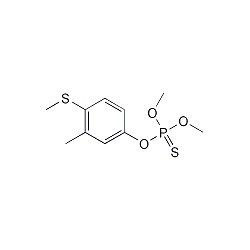 | 67329155-38-9 | 1×5 ml | Bitte anmelden |
| Fenthion | 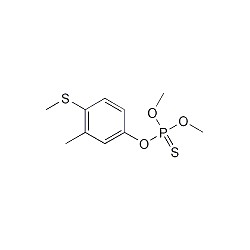 | 67394655-38-9 | 1×250 mg | Bitte anmelden |
| D6-Fenthion | 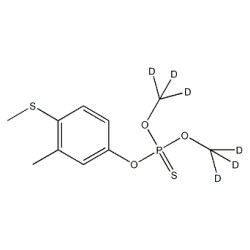 | 6875271189662-83-6 | 1×10 mg | Bitte anmelden |
ISO 17034 Certified Reference Material D6-FenthionKonzentration: 100 µg/ml Lösungsmittel: Acetone | 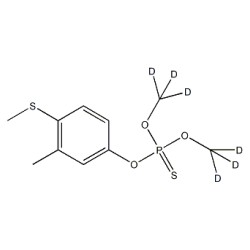 | 6875281189662-83-6 | 1×1 ml | Bitte anmelden |
Fenthion Reference Materials
High-purity reference materials for accurate and reliable residue analysis of Fenthion.
Overview
Fenthion is an organothiophosphate insecticide, avicide, and acaricide. Its primary mode of action is through cholinesterase inhibition. It is moderately toxic to humans and mammals, as classified by the U.S. Environmental Protection Agency (EPA) and the World Health Organization (WHO).
Fenthion is known by several names, including O,O-Dimethyl O-[3-methyl-4-(methylsulfanyl)phenyl] phosphorothioate, and is available in various formulations such as dust, emulsifiable concentrate, granular, liquid concentrate, spray concentrate, ULV, and wettable powder.
Uses
Fenthion is used as a contact and stomach insecticide against a wide range of pests, including fruit flies, leaf hoppers, cereal bugs, stem borers, mosquitoes, animal parasites, mites, aphids, codling moths, and weaver birds. It is applied in crops such as sugar cane, rice, field corn, beets, pome and stone fruit, citrus fruits, pistachio, cotton, olives, coffee, cocoa, vegetables, and vines.
Additionally, Fenthion is used in veterinary applications to control lice, fleas, ticks, flies, and other external parasites in cattle, swine, and dogs.
Regulatory
Due to its environmental impact, particularly on birds, the use of Fenthion has been restricted or banned in several regions. The EPA has classified Fenthion as a Restricted Use Pesticide (RUP), requiring special handling due to its toxicity. The FDA no longer approves its use, and it has been banned in countries like India and Australia.
Monitoring
Monitoring of Fenthion residues is crucial for ensuring compliance with regulatory limits. Laboratories conducting food and environmental analysis rely on high-purity reference materials to achieve accurate and reliable results.
Health Impact
Exposure to Fenthion can occur through dermal contact, inhalation, or ingestion, particularly in occupational settings. Acute poisoning symptoms include miosis, headache, nausea, dizziness, muscle weakness, and in severe cases, chest tightness, breathing difficulty, and hypertension. Chronic toxicity has not been well-documented.
Environmental Impact
Fenthion is highly toxic to birds, estuarine/marine invertebrates, and bees. Despite its short half-life in the environment, it poses significant risks to non-target species. Degradation occurs through photodegradation and biodegradation, with half-lives varying based on environmental conditions.
Safety Measures
Due to its toxicity, handling Fenthion requires strict safety measures. Personal protective equipment (PPE) should be used to minimize exposure, and proper storage and disposal practices must be followed to prevent environmental contamination.
Analytical Standards
HPC Standards GmbH provides high-purity reference materials for Fenthion, ensuring laboratories can perform accurate residue analysis. Our products meet international quality requirements and the highest industrial standards, supporting compliance with regulatory limits in food and environmental analysis.