

Malathion
Ensure Accurate Residue Analysis with High-Purity Malathion Reference Materials
Malathion, a widely used organophosphate insecticide, is essential for agriculture, public health, and residential pest control. HPC Standards GmbH offers high-purity Malathion reference materials, ensuring laboratories achieve precise and reliable residue analysis. Our products meet international quality standards, making us your trusted partner in food and environmental analysis.
Filter
| Produkt | Bild | Artikelnummer/ CAS-Nr. | Füllmenge | Preis |
|---|---|---|---|---|
| Malathion | 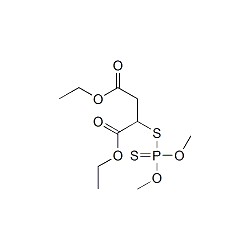 | 672938121-75-5 | 1×100 mg | Bitte anmelden |
| D7-Malathion | 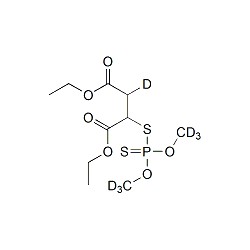 | 674841352438-94-9 | 1×20 mg | Bitte anmelden |
ISO 17034 Reference Material D10-Malathion | 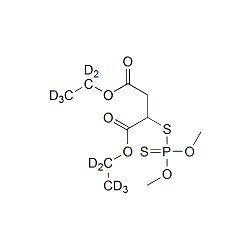 | 675003347841-48-9 | 1×10 mg | Bitte anmelden |
ISO 17034 Certified Reference Material MalathionKonzentration: 100 µg/ml Lösungsmittel: Acetonitrile | 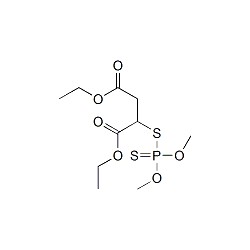 | 678439121-75-5 | 1×5 ml | Bitte anmelden |
ISO 17034 Certified Reference Material D10-MalathionKonzentration: 100 µg/ml Lösungsmittel: Acetonitrile | 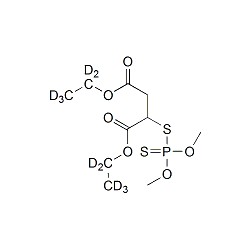 | 691636347841-48-9 | 1×1 ml | Bitte anmelden |
ISO 17034 Certified Reference Material D7-MalathionKonzentration: 100 µg/ml Lösungsmittel: Acetonitrile | 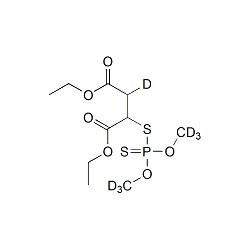 | 692410352438-94-9 | 1×1 ml | Bitte anmelden |
Malathion
High-purity reference materials for accurate and reliable residue analysis
Overview
Malathion is an organophosphate insecticide widely used in agriculture, residential landscaping, public recreation areas, and public health pest control programs. It acts as an acetylcholinesterase inhibitor, disrupting the nervous system of insects.
Its chemical formula is C10H19O6PS2, and it appears as a clear colorless liquid with a density of 1.23 g/cm3. Malathion has a melting point of 2.9°C and a boiling point of 156-157°C at 0.7 mmHg.
Uses
Malathion is primarily used as a pesticide in agriculture to control a variety of insects. It is also used in public health programs for mosquito eradication and in residential areas for pest control. Additionally, low doses of Malathion are used medically to treat head lice and scabies.
Regulatory
Malathion is regulated by various international bodies to ensure its safe use. In the United States, it is the most commonly used organophosphate insecticide. However, it was withdrawn from sale in the United Kingdom in 2002. The US Environmental Protection Agency (EPA) has conducted extensive evaluations to ensure its safety and efficacy.
Monitoring
Monitoring the levels of Malathion in food and the environment is crucial for compliance with regulatory limits. Laboratories conducting residue analysis rely on high-purity reference materials to ensure accurate and reliable results.
Health Impact
Malathion is of low toxicity to humans, but it can be metabolized into malaoxon, which is significantly more toxic. Chronic exposure to Malathion has not been conclusively linked to adverse health effects, although it is classified as a probable carcinogen by the International Agency for Research on Cancer (IARC).
Environmental Impact
Malathion is toxic to aquatic life, particularly amphibians like leopard frog tadpoles. Its use in agriculture and public health programs necessitates careful management to prevent environmental contamination.
Safety Measure
Proper handling and application of Malathion are essential to minimize risks. Personal protective equipment (PPE) should be used during its application, and exposure limits set by regulatory bodies should be adhered to.
Analytical Standards
HPC Standards GmbH provides high-purity reference materials for Malathion, ensuring laboratories can conduct precise residue analysis. Our products meet international quality requirements and the highest industrial standards, making us a competent partner in food and environmental analysis.