

PCB 52
Ensure Accurate Residue Analysis with High-Purity PCB 52 Reference Materials
PCB 52 (2,2',5,5'-Tetrachlorobiphenyl) is a crucial reference material for laboratories conducting food and environmental analysis. HPC Standards GmbH offers high-purity PCB 52, tested to meet international quality requirements and the highest industrial standards. Our reference materials are essential for calibrating analytical instruments, validating methods, and ensuring precise quantification of PCB residues. Trust HPC Standards GmbH to support your compliance with regulatory limits and safeguard public health and the environment.
Filter
| Produkt | Bild | Artikelnummer/ CAS-Nr. | Füllmenge | Preis | |
|---|---|---|---|---|---|
| PCB 52 | 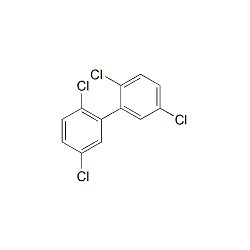 | 68214535693-99-3 | 1×10 mg | Bitte anmelden | |
ISO 17034 Certified Reference Material PCB 52Konzentration: 100 µg/ml Lösungsmittel: Isooctane | 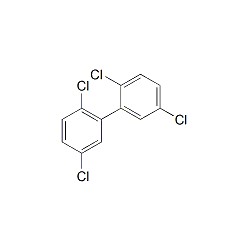 | 68214635693-99-3 | 1×1 ml | Bitte anmelden | |
ISO 17034 Certified Reference Material PCB 52Konzentration: 1000 µg/ml Lösungsmittel: Isooctane | 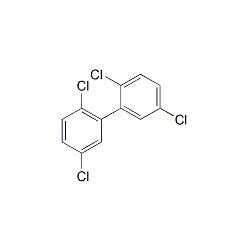 | 69234135693-99-3 | 1×1 ml | Bitte anmelden | |
ISO 17034 Certified Reference Material D3-PCB 52Konzentration: 100 µg/ml Lösungsmittel: Cyclohexane | 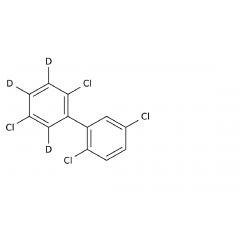 | 6946741219794-74-7 | 1×5 ml | auf Anfrage | |
ISO 17034 Certified Reference Material D3-PCB 52Konzentration: 100 µg/ml Lösungsmittel: Acetonitrile | 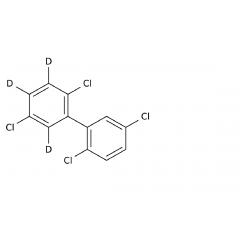 | 6947121219794-74-7 | 1×5 ml | auf Anfrage | |
PCB 52
High-purity reference materials for accurate and reliable residue analysis.
Overview
PCB 52 (2,2',5,5'-Tetrachlorobiphenyl) is one of the 209 polychlorinated biphenyl (PCB) congeners. PCBs are a group of man-made organic chemicals consisting of carbon, hydrogen, and chlorine atoms. PCB 52 is used as a reference material in residue analysis to ensure the accuracy and reliability of analytical results.
Uses
PCB 52 reference materials are essential for laboratories conducting food and environmental analysis. They are used to calibrate analytical instruments, validate methods, and ensure precise quantification of PCB residues in various matrices.
Regulatory
PCBs, including PCB 52, are regulated under various international guidelines due to their persistence, bioaccumulation, and potential adverse effects on human health and the environment. Laboratories must comply with these regulations to ensure public safety and environmental protection.
Monitoring
Regular monitoring of PCB residues in food and environmental samples is crucial. PCB 52 reference materials play a vital role in monitoring programs by providing accurate standards for detecting and quantifying PCB levels.
Health Impact
Human toxicity
PCBs, such as PCB 52, have been linked to a range of adverse health effects in humans, including cancer, immune system suppression, and endocrine disruption. Accurate residue analysis is essential to assess exposure levels and mitigate health risks.
Environmental Impact
Effects on wildlife
PCBs are persistent environmental pollutants that can accumulate in wildlife, leading to toxic effects such as reproductive failure, developmental abnormalities, and immune system impairment. Monitoring PCB levels in the environment helps protect wildlife health.
Safety Measure
Proper handling and disposal of PCB 52 reference materials are essential to prevent environmental contamination and human exposure. Laboratories must follow safety protocols and regulations to ensure safe usage.
Regulation
PCB 52 is subject to strict regulations under international frameworks such as the Stockholm Convention on Persistent Organic Pollutants (POPs). Laboratories must adhere to these regulations to ensure compliance and maintain analytical integrity.
Analytical Standards
HPC Standards GmbH provides high-purity reference materials for PCB 52, tested according to international quality requirements. Our products meet the highest industrial standards, ensuring accurate and reliable residue analysis for food and environmental laboratories.