

Phosmet
High-Purity Phosmet Reference Materials for Precise Residue Analysis
Ensure the accuracy and reliability of your Phosmet residue analysis with HPC Standards GmbH's high-purity reference materials. Our products meet international quality requirements and the highest industrial standards, making them essential for laboratories focused on food and environmental compliance. Trust HPC Standards GmbH as your competent partner in achieving precise and dependable results.
Filter
| Produkt | Bild | Artikelnummer/ CAS-Nr. | Füllmenge | Preis |
|---|---|---|---|---|
ISO 17034 Certified Reference Material PhosmetKonzentration: 100 µg/ml Lösungsmittel: Acetonitrile | 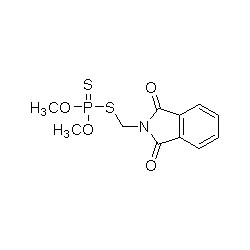 | 673411732-11-6 | 1×5 ml | Bitte anmelden |
| D6-Phosmet | 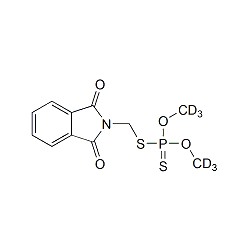 | 6752022083623-41-8 | 1×10 mg | Bitte anmelden |
ISO 17034 Certified Reference Material D6-PhosmetKonzentration: 100 µg/ml Lösungsmittel: Acetone | 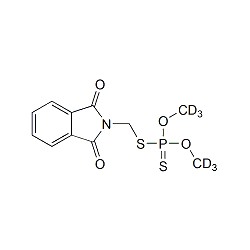 | 6752032083623-41-8 | 1×1 ml | Bitte anmelden |
ISO 17034 Reference Material Phosmet | 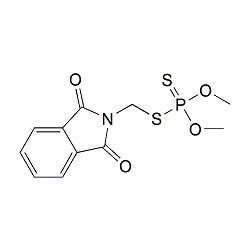 | 675282732-11-6 | 1×100 mg | Bitte anmelden |
ISO 17034 Certified Reference Material Phosmet | 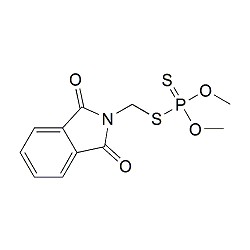 | 692117732-11-6 | 1×50 mg | Bitte anmelden |
Phosmet Reference Materials
High-purity reference materials for accurate and reliable residue analysis of Phosmet.
Overview
Phosmet is a non-systemic organophosphate insecticide primarily used on apple trees to control codling moths. It is also applied to a variety of fruit crops, ornamentals, and vines to manage aphids, mites, and fruit flies. Phosmet is a phthalimide-derived compound with a chemical formula of C11H12NO4PS2 and a molar mass of 317.31 g/mol.
Uses
Phosmet is widely used in agriculture for pest control on fruit trees (apple, pear, peach), nut trees (almonds, walnuts), and other crops. It is also registered for use on livestock such as cattle, swine, and dogs to treat lice, fleas, and ticks. Additionally, homeowners use Phosmet for treating trees, bushes, and shrubs.
Regulatory
Phosmet is regulated by various international bodies to ensure safe usage. In the United States, it was first registered in 1966. It is classified under EPA toxicity class II, indicating moderate toxicity. Recently, Phosmet was banned in the European Union in 2022 due to its harmful effects.
Monitoring
Monitoring Phosmet residues is crucial for ensuring compliance with regulatory limits in food and environmental samples. Laboratories conducting residue analysis rely on high-purity reference materials to achieve accurate and reliable results.
Health Impact
Phosmet inhibits acetylcholinesterase, leading to an accumulation of acetylcholine, which can cause symptoms such as muscle twitching, respiratory depression, and in severe cases, convulsions and death. It is moderately toxic and primarily affects the nervous system. There is limited data on its carcinogenicity, reproductive toxicity, and teratogenic effects.
Environmental Impact
Phosmet is highly toxic to bees and poses risks to other non-target organisms. Its environmental degradation and long-term effects are still being studied. The compound is listed on the US Emergency Planning List of Extremely Hazardous Substances.
Safety Measure
Phosmet may be fatal if inhaled or absorbed through the skin. Proper safety measures, including the use of protective clothing and equipment, are essential for workers handling Phosmet. Antidotes such as atropine and pralidoxime can be administered in cases of poisoning.
Analytical Standards
HPC Standards GmbH provides high-purity reference materials for Phosmet, ensuring laboratories can conduct precise residue analysis. Our products meet international quality requirements and the highest industrial standards, making us a competent partner in food and environmental analysis.