

Alachlor
Ensure Accurate Residue Analysis with High-Purity Alachlor Reference Materials
At HPC Standards GmbH, we offer high-purity reference materials for Alachlor, an essential herbicide for controlling annual grasses and broadleaf weeds. Our products are meticulously tested to meet international quality standards, providing laboratories with the reliability needed for precise food and environmental analysis. Trust HPC Standards for your Alachlor residue analysis needs and ensure compliance with regulatory limits.
Filter
| Product | Image | Catalog No./ CAS No. | Quantity | Price |
|---|---|---|---|---|
ISO 17034 Reference Material Alachlor | 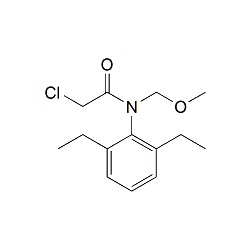 | 67504115972-60-8 | 1×250 mg | Please log in |
| D3-Alachlor | 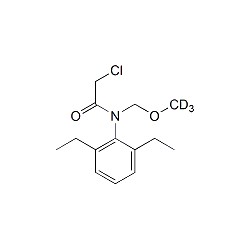 | 676387 | 1×10 mg | Please log in |
ISO 17034 Certified Reference Material D3-AlachlorConcentration: 100 µg/ml Solvent: Acetone | 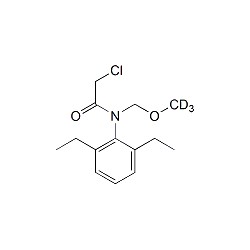 | 676699 | 1×1 ml | Please log in |
ISO 17034 Certified Reference Material AlachlorConcentration: 100 µg/ml Solvent: Acetonitrile | 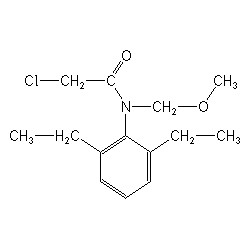 | 67854215972-60-8 | 1×5 ml | Please log in |
ISO 17034 Certified Reference Material Alachlor | 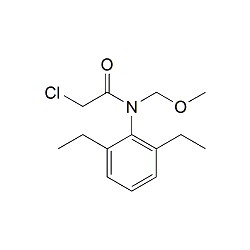 | 69109015972-60-8 | 1×100 mg | Please log in |
Alachlor
High-purity reference materials for accurate and reliable residue analysis.
Overview
Alachlor is an herbicide from the chloroacetanilide family, primarily used for controlling annual grasses and broadleaf weeds in crops such as corn, sorghum, and soybeans. It is an odorless, cream-colored solid with a chemical formula of C14H20ClNO2 and a molar mass of 269.767 g/mol.
Uses
The largest use of alachlor is as a herbicide for control of annual grasses and broadleaf weeds in crops. It is commonly used in mixed formulations with other herbicides such as atrazine, glyphosate, trifluralin, and imazaquin. Alachlor is a selective, systemic herbicide absorbed by germinating shoots and roots, interfering with a plant's ability to produce protein and root growth.
Regulatory
Use of alachlor is illegal in the European Union and no products containing alachlor are currently registered in the United States. The United States Environmental Protection Agency (EPA) classifies alachlor as toxicity class III - slightly toxic. The Maximum Contaminant Level (MCL) for drinking water is two parts per billion (2 ppb).
Monitoring
Alachlor has been detected in rural domestic well water by EPA's National Survey of Pesticides in Drinking Water Wells. EPA's Pesticides in Ground Water Database reports detections of alachlor in ground water at concentrations above the MCL in at least 15 U.S. states.
Health Impact
Long-term exposure to alachlor at levels above the MCL in drinking water can cause slight skin and eye irritation, potential damage to the liver, kidney, spleen, lining of the nose and eyelids, and cancer. The Maximum Contaminant Level Goal (MCLG) for alachlor is zero to prevent long-term effects.
Environmental Impact
Alachlor exhibits moderate sorption in soil and its degradation in soil appears to be largely biologically mediated, producing multiple metabolites. The half-life in aerobic soil ranges from about 6 to 15 days and is considerably shorter under anaerobic conditions. The major source of environmental release of alachlor is through its manufacture and use as a herbicide.
Safety Measure
Alachlor is classified as a Schedule 7 (Dangerous Poison) substance under Australian law, with strict controls on access, use, and storage. The flash point of alachlor is 198°C (388°F; 471K) and the LD50 (median dose) is 930 mg/kg.
Analytical Standards
HPC Standards GmbH provides high-purity reference materials for alachlor, ensuring accurate and reliable residue analysis. Our products are tested according to international quality requirements and meet the highest industrial standards, essential for laboratories conducting food and environmental analysis to ensure compliance with regulatory limits.