


Amitrole
Ensure Accurate Residue Analysis with High-Purity Amitrole Reference Materials
Discover the essential Amitrole reference materials from HPC Standards GmbH, designed for precise residue analysis in food and environmental samples. Our high-purity standards meet the highest industrial requirements, ensuring compliance with regulatory limits and providing reliable benchmarks for your laboratory needs. Trust HPC Standards for your food and environmental analysis.
Filter
| Product | Image | Catalog No./ CAS No. | Quantity | Price | |
|---|---|---|---|---|---|
ISO 17034 Certified Reference Material AmitroleConcentration: 10.0 µg/ml Solvent: Methanol | 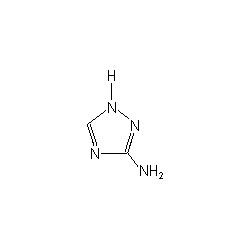 | 67659861-82-5 | 1×10 ml | Please log in | |
ISO 17034 Certified Reference Material AmitroleConcentration: 100 µg/ml Solvent: Acetonitrile | 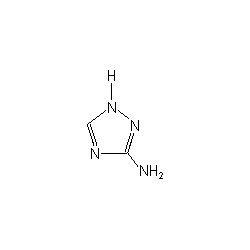 | 67826061-82-5 | 1×1 ml | Please log in | |
ISO 17034 Certified Reference Material 15N-AmitroleConcentration: 100 µg/ml Solvent: Methanol | 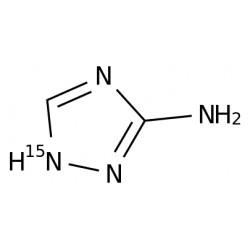 | 690721367498-28-0 | 1×1 ml | on request | |
ISO 17034 Certified Reference Material 13C,15N-AmitroleConcentration: 100 µg/ml Solvent: Acetonitrile | 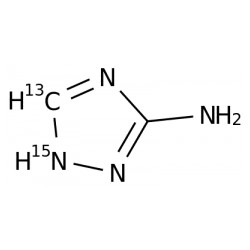 | 690723 | 1×1 ml | Please log in | |
Amitrole Reference Materials
High-purity reference materials for accurate residue analysis in food and environmental samples.
Overview
Amitrole, also known as 3-Amino-1,2,4-triazole, is a heterocyclic organic compound. It is a nonselective systemic triazole herbicide used primarily on nonfood croplands to control annual grasses, broadleaf, and aquatic weeds.
Our high-purity reference materials for Amitrole are essential for laboratories conducting food and environmental analysis to ensure compliance with regulatory limits.
Uses
Amitrole is utilized in agriculture for weed control on nonfood croplands. It acts as a competitive inhibitor of the enzyme imidazoleglycerol-phosphate dehydratase, which is involved in histidine biosynthesis.
Regulatory
Amitrole has been banned in several regions due to its carcinogenic properties. Notably, it was included in a biocide ban proposed by the Swedish Chemicals Agency and approved by the European Parliament in 2009.
Monitoring
Accurate monitoring of Amitrole residues in food and environmental samples is crucial to ensure compliance with safety standards and regulatory limits. Our reference materials provide reliable benchmarks for such analyses.
Health Impact
Human Toxicity
Amitrole is classified as a potential occupational carcinogen. Exposure to Amitrole can lead to various health issues, necessitating stringent safety measures during its handling and application.
Environmental Impact
Effects on Wildlife
Amitrole can have detrimental effects on wildlife, particularly aquatic organisms, due to its herbicidal properties. Proper monitoring and regulation are essential to mitigate these impacts.
Safety Measures
Handling Amitrole requires adherence to safety protocols to minimize exposure risks. Appropriate personal protective equipment (PPE) and adherence to safety guidelines are mandatory.
Analytical Standards
HPC Standards GmbH provides high-purity reference materials for Amitrole, ensuring accurate and reliable residue analysis. Our products meet the highest industrial standards and are tested according to international quality requirements.