


Bromacil
Accurate Bromacil Residue Analysis with High-Purity Reference Materials
Ensure precise and reliable Bromacil residue analysis with HPC Standards GmbH's high-purity reference materials. Our products meet international quality requirements and the highest industrial standards, making them indispensable for laboratories focused on food and environmental analysis. Trust HPC Standards for compliance and accuracy in your Bromacil testing.
Filter
| Product | Image | Catalog No./ CAS No. | Quantity | Price | |
|---|---|---|---|---|---|
ISO 17034 Certified Reference Material BromacilConcentration: 100 µg/ml Solvent: Acetonitrile | 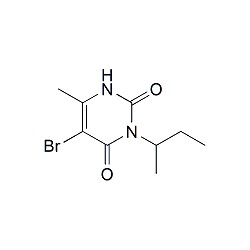 | 673211314-40-9 | 1×5 ml | Please log in | |
ISO 17034 Certified Reference Material BromacilConcentration: 10.0 µg/ml Solvent: Ethyl acetate | 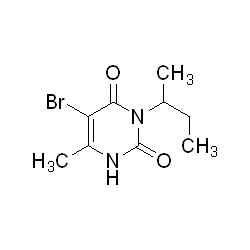 | 673744314-40-9 | 1×10 ml | Please log in | |
ISO 17034 Reference Material Bromacil | 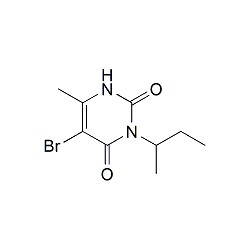 | 675494314-40-9 | 1×250 mg | Please log in | |
ISO 17034 Certified Reference Material Bromacil | 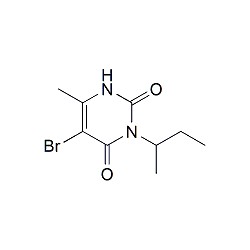 | 691568314-40-9 | 1×100 mg | Please log in | |
ISO 17034 Reference Material D3-Bromacil | 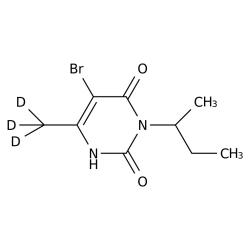 | 6932302714436-92-5 | 1×5 mg | on request | |
ISO 17034 Certified Reference Material D3-BromacilConcentration: 100 µg/ml Solvent: Acetonitrile | 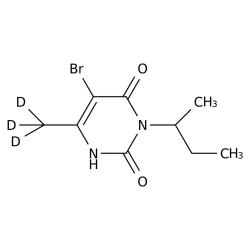 | 6932312714436-92-5 | 1×1 ml | on request | |
Bromacil Reference Materials
High-purity reference materials for accurate and reliable residue analysis of Bromacil.
Overview
Bromacil is an organic compound with the chemical formula C9H13BrN2O2, commonly used as a herbicide. It was first registered as a pesticide in the U.S. in 1961. Bromacil is used for brush control on non-cropland areas and works by interfering with photosynthesis.
Uses
Bromacil is primarily used for nonselective weed and brush control on non-croplands and selective weed control on crops such as citrus fruits and pineapples. It is also effective in controlling perennial grasses.
Regulatory
Bromacil is regulated by various environmental and health agencies. The U.S. Environmental Protection Agency (EPA) has assessed the risks associated with Bromacil, categorizing it as a possible human carcinogen. The National Institute for Occupational Safety and Health (NIOSH) recommends that workers handling Bromacil should not exceed an exposure of 1 ppm (10 mg/m3) over an eight-hour time-weighted average.
Monitoring
Monitoring Bromacil residues is crucial for ensuring compliance with regulatory limits. Laboratories conducting food and environmental analysis rely on high-purity reference materials to achieve accurate and reliable results.
Health Impact
Bromacil is slightly toxic if ingested or comes into contact with skin and practically nontoxic if inhaled. It is a mild eye irritant and a very slight skin irritant. Bromacil is not a skin sensitizer. In laboratory studies, Bromacil has been placed in Toxicity Category IV for oral, dermal, and inhalation routes.
Environmental Impact
Bromacil has a half-life of about 60 days in soils but can persist for up to 8 months under certain conditions. It is stable to hydrolysis under normal environmental conditions. Bromacil can affect non-target plants by interfering with their photosynthesis.
Safety Measures
When handling Bromacil, it is essential to follow safety precautions. Dry formulations must bear the word "Caution," and liquid formulations must signal "Warning." Bromacil should not be used in residential or recreational areas due to the risk of exposure. It should be stored in a cool, dry place, and thorough hand-washing is advised after handling.
Analytical Standards
HPC Standards GmbH provides high-purity reference materials for Bromacil, ensuring accurate and reliable residue analysis. Our products meet international quality requirements and the highest industrial standards, making them essential for laboratories conducting food and environmental analysis.
```