


Chlorfenvinphos
High-Purity Chlorfenvinphos Reference Materials for Precise Residue Analysis
Ensure the highest accuracy in your residue analysis with our high-purity Chlorfenvinphos reference materials. HPC Standards GmbH provides rigorously tested products that meet international quality standards, essential for laboratories focused on food and environmental safety. Trust us as your competent partner in achieving compliance with regulatory limits.
Filter
| Product | Image | Catalog No./ CAS No. | Quantity | Price | |
|---|---|---|---|---|---|
ISO 17034 Certified Reference Material ChlorfenvinphosConcentration: 100 µg/ml Solvent: Ethyl acetate | 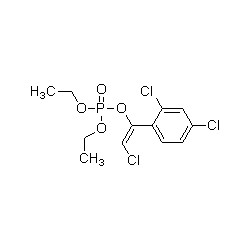 | 673506470-90-6 | 1×5 ml | Please log in | |
ISO 17034 Certified Reference Material ChlorfenvinphosConcentration: 100 µg/ml Solvent: Acetonitrile | 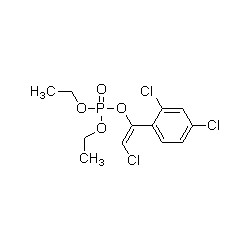 | 675301470-90-6 | 1×5 ml | Please log in | |
ISO 17034 Reference Material Chlorfenvinphos | 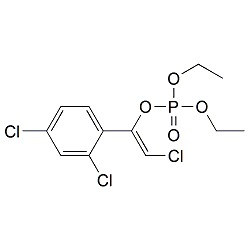 | 677776470-90-6 | 1×250 mg | Please log in | |
ISO 17034 Certified Reference Material ChlorfenvinphosConcentration: 100 µg/ml Solvent: Toluene | 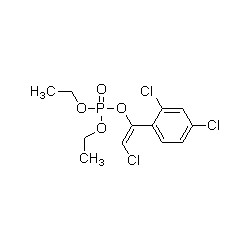 | 677970470-90-6 | 1×1 ml | Please log in | |
ISO 17034 Certified Reference Material cis-ChlorfenvinphosConcentration: 10.0 µg/ml Solvent: Cyclohexane | 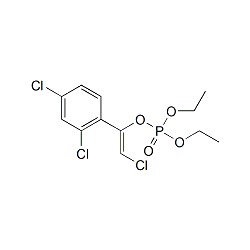 | 68444418708-87-7 | 1×1 ml | on request | |
ISO 17034 Certified Reference Material D10-ChlorfenvinphosConcentration: 100 µg/ml Solvent: Acetone | 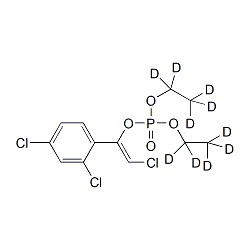 | 6875261346606-54-9 | 1×1 ml | Please log in | |
Chlorfenvinphos
High-purity reference materials for accurate and reliable residue analysis
Overview
Chlorfenvinphos is an organophosphorus compound widely used as an insecticide and acaricide. It is an enol ester derived from dichloro acetophenone and diethylphosphonic acid. The pure chemical is a colorless solid, but commercially it is often marketed as an amber liquid.
Chlorfenvinphos has been included in many products since its first use in 1963. However, due to its toxic effects as a cholinesterase inhibitor, it has been banned in several countries, including the United States and the European Union.
Uses
Chlorfenvinphos was used to control fleas and ticks on domestic pets and other animals, as well as flies in dairy barns, milk rooms, poultry houses, and other animal buildings. It was also used as a soil insecticide for controlling root maggots, root worms, and cutworms, and against Colorado beetles on potatoes and scale insects and mite eggs on citrus.
Regulatory
Chlorfenvinphos is classified as an extremely hazardous substance in the United States and is subject to strict reporting requirements. Its use has been banned in the European Union and the United States. In Europe, it is banned as a plant protection product, with some exceptions in Switzerland. In Australia, its use is partially banned.
Monitoring
Monitoring of chlorfenvinphos involves detecting traces of the unchanged compound and its polar metabolites in animals. Additionally, measuring the activity of cholinesterases in the blood can be used as a marker of exposure.
Health Impact
Chlorfenvinphos is a cholinesterase inhibitor, leading to the accumulation of acetylcholine and continuous stimulation of neurons. Symptoms of poisoning include respiratory failure, bronchoconstriction, bradycardia, increased salivation, lacrimation, sweating, and increased peristalsis. Long-term exposure decreases plasma and erythrocyte cholinesterase activity.
Environmental Impact
Chlorfenvinphos is corrosive to metal and hydrolyzes in the environment. It is classified as an extremely hazardous substance and is subject to strict reporting requirements for environmental releases.
Safety Measure
In cases of chlorfenvinphos poisoning, treatment includes the administration of anticholinergics such as atropine, cholinesterase reactivators like pralidoxime, and anticonvulsants such as benzodiazepines. The efficacy of oxime treatment is controversial.
Analytical Standards
HPC Standards GmbH provides high-purity reference materials for chlorfenvinphos, ensuring accurate and reliable residue analysis. Our products are tested according to international quality requirements and meet the highest industrial standards, essential for laboratories conducting food and environmental analysis to ensure compliance with regulatory limits.