

Clofibrate
Clofibrate Reference Materials: Ensuring Precision in Residue Analysis
Unlock the highest accuracy in your residue analysis with our high-purity Clofibrate reference materials. Essential for laboratories focused on food and environmental analysis, our products meet stringent international quality standards, ensuring compliance with regulatory limits. Trust HPC Standards GmbH for reliable and precise analytical solutions.
Filter
| Product | Image | Catalog No./ CAS No. | Quantity | Price | |
|---|---|---|---|---|---|
| Clofibrate | 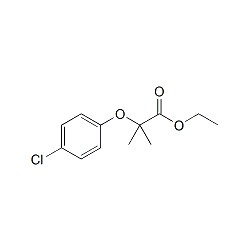 | 677462637-07-0 | 1×100 mg | Please log in | |
ISO 17034 Certified Reference Material ClofibrateConcentration: 100 µg/ml Solvent: Acetonitrile | 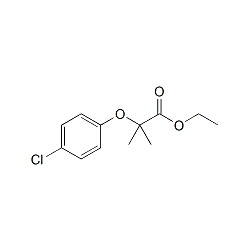 | 680841637-07-0 | 1×1 ml | Please log in | |
ISO 17034 Certified Reference Material D4-ClofibrateConcentration: 100 µg/ml Solvent: Acetonitrile | 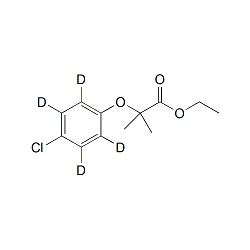 | 6854411189654-03-2 | 1×1 ml | on request | |
Clofibrate Reference Materials
High-purity reference materials for accurate residue analysis.
Overview
Clofibrate is a chemical compound primarily used as a lipid-lowering agent to control high cholesterol and triacylglyceride levels in the blood. It belongs to the class of fibrates and was patented in 1958 by Imperial Chemical Industries and approved for medical use in 1963.
Despite its initial success, Clofibrate was discontinued in 2002 due to adverse effects, including the formation of cholesterol stones in the gallbladder and the induction of SIADH (syndrome of inappropriate secretion of antidiuretic hormone).
Uses
Clofibrate is used to increase lipoprotein lipase activity, promoting the conversion of VLDL (very low-density lipoprotein) to LDL (low-density lipoprotein) and increasing the level of HDL (high-density lipoprotein). This makes it effective in lowering VLDL levels in the blood.
Regulatory
Clofibrate was discontinued in the United States in 2002 due to its adverse effects. Regulatory bodies have since scrutinized its use, leading to its removal from the market.
Monitoring
Monitoring Clofibrate levels in the environment and food products is essential to ensure compliance with regulatory limits. Laboratories conducting such analyses require high-purity reference materials to achieve accurate results.
Health Impact
Human Toxicity
Clofibrate has been associated with several adverse health effects, including the formation of cholesterol stones in the gallbladder and the induction of SIADH. Additionally, a World Health Organization Cooperative Trial observed excess mortality in the Clofibrate-treated group, even though cholesterol levels were successfully lowered.
Environmental Impact
Effects on Wildlife
The environmental impact of Clofibrate, particularly its effects on wildlife, requires thorough investigation. Proper disposal and monitoring are essential to minimize its ecological footprint.
Safety Measures
Given the adverse effects associated with Clofibrate, stringent safety measures should be implemented in laboratories and industries handling this compound. Proper protective equipment and disposal methods should be employed to ensure safety.
Analytical Standards
HPC Standards GmbH provides high-purity reference materials for Clofibrate, ensuring accurate and reliable residue analysis. Our products are tested according to international quality requirements and meet the highest industrial standards, making them essential for laboratories conducting food and environmental analysis.