


Fluazifop
High-Purity Fluazifop Reference Materials for Precise Residue Analysis
Ensure the accuracy and reliability of your residue analysis with HPC Standards GmbH's high-purity Fluazifop reference materials. Our products meet international quality requirements and the highest industrial standards, essential for laboratories conducting food and environmental analysis to comply with regulatory limits. Trust HPC Standards GmbH as your competent partner in the fields of food and environmental analysis.
Filter
| Product | Image | Catalog No./ CAS No. | Quantity | Price |
|---|---|---|---|---|
ISO 17034 Certified Reference Material FluazifopConcentration: 10.0 µg/ml Solvent: Acetonitrile | 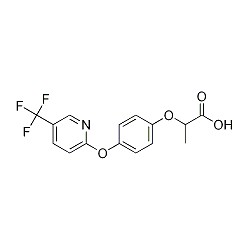 | 67329269335-91-7 | 1×10 ml | Please log in |
ISO 17034 Certified Reference Material FluazifopConcentration: 100 µg/ml Solvent: Acetonitrile | 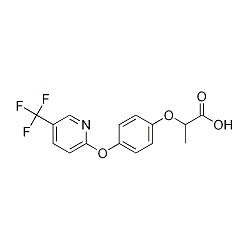 | 67329369335-91-7 | 1×5 ml | Please log in |
| Fluazifop | 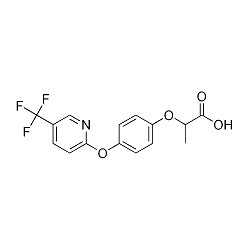 | 67382569335-91-7 | 1×10 mg | Please log in |
ISO 17034 Certified Reference Material FluazifopConcentration: 10.0 µg/ml Solvent: Ethyl acetate | 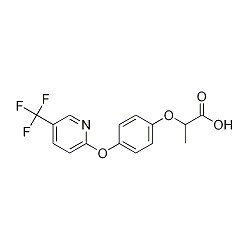 | 67587169335-91-7 | 1×10 ml | Please log in |
ISO 17034 Certified Reference Material D3-FluazifopConcentration: 100 µg/ml Solvent: Acetonitrile | 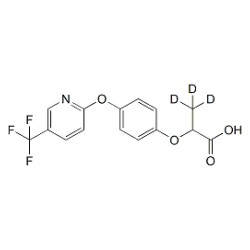 | 684683 | 1×1 ml | Please log in |
Fluazifop
High-purity reference materials for accurate residue analysis
Overview
Fluazifop is an organic compound used as a selective herbicide. The active ingredient is the 2R enantiomer, known as fluazifop-P, and it is commonly sold as its butyl ester under the brand name Fusilade. Fluazifop belongs to the aryloxyphenoxypropionate class of herbicides, also known as "fops," which target grass weeds in broad-leaved crops.
Uses
Fluazifop is primarily used in agriculture to control grass weeds in crops such as soybeans, cotton, and other broad-leaved plants. It is effective due to its selective inhibition of the acetyl-CoA carboxylase (ACCase) enzyme, which is essential for fatty acid biosynthesis in grasses.
Regulatory
Fluazifop is registered for use in the European Union under EC Regulation 1107/2009. The acceptable daily intake (ADI) for fluazifop is set at 0-0.004 mg/kg body weight by the World Health Organization (WHO) and the Food and Agriculture Organization (FAO).
Monitoring
The use of fluazifop is monitored by various regulatory bodies, including the Environmental Protection Agency (EPA) and the Herbicides Resistance Action Committee (HRAC). The US Geological Survey estimates that approximately 200,000 pounds of fluazifop were applied in US agriculture in 2018, predominantly in soybean cultivation.
Health Impact
Fluazifop-P butyl has a low toxicity with an LD50 of 2451 mg/kg (rats, oral). It metabolizes in plants and soil to the parent acid, fluazifop-P. The Codex Alimentarius database lists maximum residue limits for fluazifop in various food products, with some limits set at the detection level of 0.01 mg/kg.
Environmental Impact
Fluazifop's environmental fate and ecotoxicology have been extensively studied. It is known to have specific activity on grasses due to its inhibition of the plastid isoform of ACCase, which is not present in broad-leaved plants or mammals. Resistance management strategies are crucial to prevent the development of resistant weed species.
Safety Measure
Fluazifop is labeled with GHS hazard statements H361 (suspected of damaging fertility or the unborn child) and H410 (very toxic to aquatic life with long-lasting effects). Precautionary statements include P201, P202, P273, P281, P308+P313, P391, P405, and P501. The flash point of fluazifop is 225°C.
Analytical Standards
HPC Standards GmbH provides high-purity reference materials for fluazifop, ensuring accurate and reliable residue analysis. Our products are tested according to international quality requirements and meet the highest industrial standards. These reference materials are essential for laboratories conducting food and environmental analysis to ensure compliance with regulatory limits.