


Fluopicolide
Ensure Accurate Residue Analysis with High-Purity Fluopicolide Reference Materials
Fluopicolide: The Essential High-Purity Reference Material for Precise Residue Analysis in Food and Environmental Samples. HPC Standards GmbH offers top-tier fluopicolide reference materials, rigorously tested to meet international quality standards. Ideal for laboratories focused on compliance and reliability in residue analysis.
Filter
| Product | Image | Catalog No./ CAS No. | Quantity | Price |
|---|---|---|---|---|
ISO 17034 Certified Reference Material FluopicolideConcentration: 10.0 µg/ml Solvent: Acetonitrile | 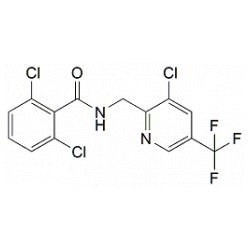 | 673300239110-15-7 | 1×10 ml | Please log in |
ISO 17034 Certified Reference Material FluopicolideConcentration: 100 µg/ml Solvent: Acetonitrile | 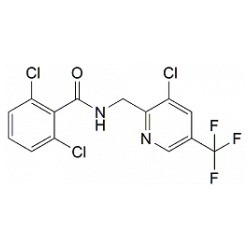 | 673301239110-15-7 | 1×5 ml | Please log in |
ISO 17034 Reference Material Fluopicolide | 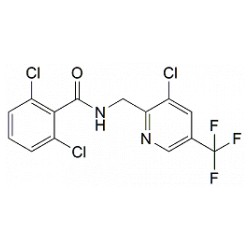 | 677700239110-15-7 | 1×100 mg | Please log in |
| D3-Fluopicolide | 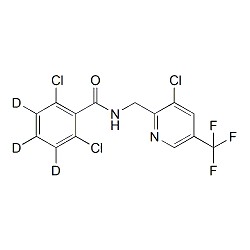 | 684317 | 1×10 mg | Please log in |
ISO 17034 Certified Reference Material D3-FluopicolideConcentration: 100 µg/ml Solvent: Acetonitrile | 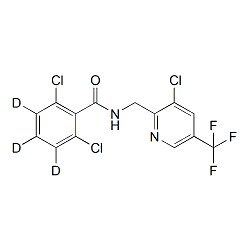 | 687310 | 1×1 ml | Please log in |
ISO 17034 Certified Reference Material Fluopicolide | 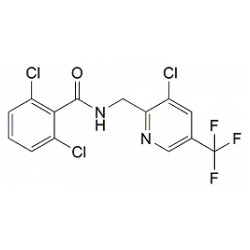 | 690823239110-15-7 | 1×50 mg | Please log in |
Fluopicolide
High-purity reference materials for accurate residue analysis in food and environmental samples.
Overview
Fluopicolide is a fungicide used in agriculture to control diseases caused by oomycetes such as late blight of potato. It is classified as an acylpicolide and its chemical name is 2,6-dichloro-N-{[3-chloro-5-(trifluoromethyl)pyridin-2-yl]methyl}benzamide.
The precise mode of action is not fully understood, but it is believed to affect spectrin-like proteins in the cytoskeleton of oomycetes. This unique mode of action allows it to inhibit the growth of strains resistant to other fungicides.
Uses
Fluopicolide is effective against a variety of pathogens including Phytophthora infestans, Phytophthora capsicii, Phytophthora porri, Plasmopara viticola, Perenospora parasitica, Peronospora tabacina, Peronospora sparsa, Pseudoperonospora cubensis, and Bremia lactucae.
Commercially, it is available in co-formulations such as Profiler (with Fosetyl-Al) for use in vines and Infinito (with propamocarb) for use on potatoes and vegetables.
Regulatory
Fluopicolide is regulated under various international guidelines to ensure its safe use in agriculture. Compliance with these regulations is essential for the approval and continued use of this fungicide in different regions.
Monitoring
Regular monitoring of fluopicolide residues in food and environmental samples is crucial to ensure compliance with regulatory limits. Laboratories use high-purity reference materials to achieve accurate and reliable analysis results.
Health Impact
Fluopicolide has low acute toxicity with a median lethal dose (LD50) in rats of >5000 mg/kg. It does not cause skin sensitization, cancer, or developmental problems in mammals based on available studies.
Environmental Impact
Fluopicolide affects the motility of zoospores, the germination of cysts, the growth of the mycelium, and sporulation. Its systemic activity is limited to the xylem, moving towards the tips of stems but not reaching the roots.
Safety Measure
Proper handling and application of fluopicolide are essential to minimize exposure and environmental impact. Users should follow safety guidelines and wear appropriate protective equipment during handling and application.
Analytical Standards
HPC Standards GmbH provides high-purity reference materials for fluopicolide, ensuring accurate and reliable residue analysis. Our products meet the highest industrial standards and are tested according to international quality requirements, making them essential for laboratories conducting food and environmental analysis.