


Fluxapyroxad
Ensure Accurate Residue Analysis with High-Purity Fluxapyroxad Reference Materials
HPC Standards GmbH offers top-tier Fluxapyroxad reference materials, essential for precise and reliable residue analysis. Our high-purity standards meet international quality requirements, supporting laboratories in food and environmental analysis to comply with regulatory limits. Trust HPC Standards for your analytical needs in pesticide residue testing.
Filter
| Product | Image | Catalog No./ CAS No. | Quantity | Price |
|---|---|---|---|---|
ISO 17034 Certified Reference Material FluxapyroxadConcentration: 100 µg/ml Solvent: Acetonitrile | 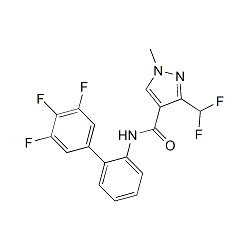 | 676297907204-31-3 | 1×1 ml | Please log in |
ISO 17034 Reference Material Fluxapyroxad | 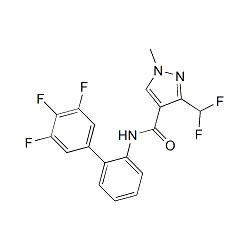 | 677303907204-31-3 | 1×100 mg | Please log in |
ISO 17034 Certified Reference Material Fluxapyroxad | 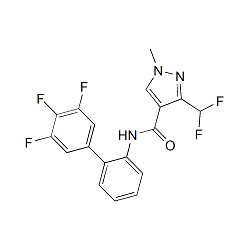 | 694085907204-31-3 | 1×50 mg | Please log in |
Fluxapyroxad Reference Materials
High-purity reference materials for accurate and reliable residue analysis
Overview
Fluxapyroxad is a broad-spectrum pyrazole-carboxamide fungicide used on a variety of commercial crops. It inhibits the succinate dehydrogenase (SQR) enzyme, stunting fungal growth and preventing infections.
Uses
Fluxapyroxad is commonly used as a fungicide for grains, row crops, vegetable crops, and fruit trees. It is effective against diseases like black point, Botrytis gray mold, early blight, and powdery mildew.
Regulatory
Fluxapyroxad has been approved for use in the United States, Canada, and the European Union. It is registered under various trade names such as Sercadis, Imbrex, and Xemium.
Monitoring
The United States Environmental Protection Agency (EPA) has established tolerance levels for fluxapyroxad residues on consumer food, ranging from 0.05 ppm on almonds and pecans to 15 ppm on leafy vegetables.
Health Impact
Human Toxicity
Fluxapyroxad has low toxicity for humans, being slightly toxic after ingestion and relatively non-toxic after inhalation or skin contact. However, it can affect liver function at higher doses or longer exposure durations.
Environmental Impact
Effects on Wildlife
Fluxapyroxad is highly toxic to fish, freshwater and saltwater invertebrates, and aquatic plants. It is also toxic to small mammals.
Safety Measures
Proper handling and application procedures should be followed to minimize environmental contamination and human exposure. Personal protective equipment (PPE) is recommended during handling.
Regulation
The EPA is considering reducing the tolerance levels for fluxapyroxad residues in food. It is important for laboratories to stay updated on regulatory changes.
Analytical Standards
HPC Standards GmbH provides high-purity reference materials for fluxapyroxad, ensuring accurate and reliable residue analysis. Our products meet international quality requirements and the highest industrial standards.