

Folpet
Ensure Accurate Residue Analysis with High-Purity Folpet Reference Materials
HPC Standards GmbH offers high-purity Folpet reference materials, essential for precise residue analysis in food and environmental laboratories. Our products meet international quality standards, ensuring compliance with regulatory limits and safeguarding public health and the environment. Trust HPC Standards for reliable and accurate analytical results.
Filter
| Product | Image | Catalog No./ CAS No. | Quantity | Price |
|---|---|---|---|---|
ISO 17034 Certified Reference Material FolpetConcentration: 10.0 µg/ml Solvent: Ethyl acetate | 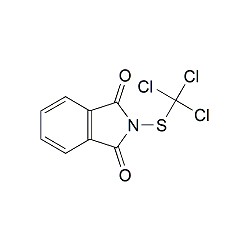 | 673609133-07-3 | 1×10 ml | Please log in |
ISO 17034 Certified Reference Material FolpetConcentration: 100 µg/ml Solvent: Ethyl acetate | 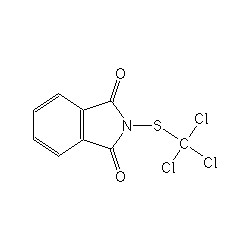 | 673610133-07-3 | 1×5 ml | Please log in |
ISO 17034 Reference Material Folpet | 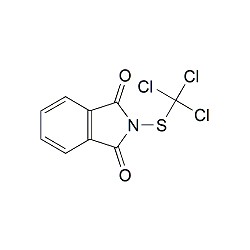 | 674640133-07-3 | 1×250 mg | Please log in |
ISO 17034 Certified Reference Material D4-FolpetConcentration: 100 µg/ml Solvent: Acetone | 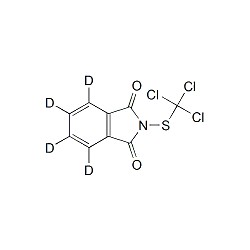 | 6765951327204-12-5 | 1×1 ml | Please log in |
| D4-Folpet | 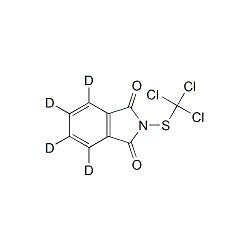 | 6775251327204-12-5 | 1×10 mg | Please log in |
ISO 17034 Certified Reference Material Folpet | 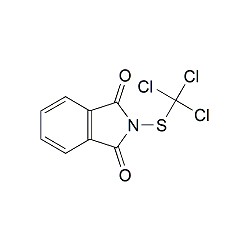 | 690959133-07-3 | 1×100 mg | Please log in |
Folpet
High-purity reference materials for accurate residue analysis
Overview
Folpet is an organic compound with the formula C6H4(CO)2NSCCl3. It is a fungicide derived from phthalimide and trichloromethylsulfenyl chloride. The compound is typically a white solid, although commercial samples may appear brownish. Folpet is structurally related to Captan, another trichloromethylsulfenyl-containing fungicide.
Uses
Folpet is primarily used as a fungicide in agriculture to protect crops from fungal diseases. It is applied to a variety of crops, including fruits, vegetables, and ornamental plants, to prevent and control fungal infections.
Regulatory
Folpet is regulated under various international guidelines to ensure its safe use in agriculture. It is important for laboratories conducting residue analysis to comply with these regulatory limits to ensure food safety and environmental protection.
Monitoring
Regular monitoring of Folpet residues in food and the environment is essential to ensure compliance with regulatory standards. Laboratories utilize high-purity reference materials to achieve accurate and reliable analysis results.
Health Impact
Folpet has been associated with several health hazards. It can cause skin sensitization (H317), serious eye irritation (H319), and respiratory irritation (H332). It is also suspected of causing cancer (H351) and is very toxic to aquatic life (H400).
Environmental Impact
Folpet is highly toxic to aquatic life, and its use must be carefully managed to prevent environmental contamination. Proper application and disposal practices are crucial to minimize its impact on the environment.
Safety Measure
When handling Folpet, appropriate safety measures should be taken. This includes wearing protective clothing, gloves, and eye protection. It is also important to follow precautionary statements such as P201, P202, P261, P264, P271, P272, P273, P280, P281, P302+P352, P304+P312, P304+P340, P305+P351+P338, P308+P313, P312, P321, P333+P313, P337+P313, P363, P391, P405, and P501.
Analytical Standards
HPC Standards GmbH provides high-purity reference materials for Folpet, ensuring accurate and reliable residue analysis. Our products are tested according to international quality requirements and meet the highest industrial standards. These reference materials are essential for laboratories conducting food and environmental analysis to ensure compliance with regulatory limits.