

Hydramethylnon
Ensure Accurate Residue Analysis with High-Purity Hydramethylnon Reference Materials
Hydramethylnon: Essential for precise residue analysis, our high-purity reference materials meet the highest industrial standards. Used in various insecticides, Hydramethylnon requires careful monitoring to ensure compliance with regulatory limits. HPC Standards GmbH provides top-quality reference materials, tested to international quality requirements, ensuring reliable results for food and environmental laboratories.
Filter
| Product | Image | Catalog No./ CAS No. | Quantity | Price |
|---|---|---|---|---|
ISO 17034 Reference Material Hydramethylnon | 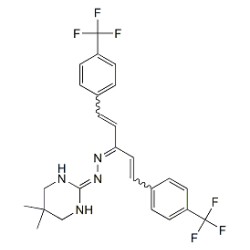 | 67499067485-29-4 | 1×100 mg | Please log in |
ISO 17034 Certified Reference Material HydramethylnonConcentration: 100 µg/ml Solvent: Acetonitrile | 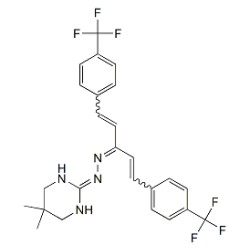 | 68848167485-29-4 | 1×5 ml | Please log in |
Hydramethylnon Reference Materials
High-purity reference materials for accurate and reliable residue analysis.
Overview
Hydramethylnon is an organofluorine compound, also known as AC 217,300. It belongs to the chemical class of trifluoromethyl amino hydrazones, functioning as a metabolic inhibitor.
It is primarily used as an insecticide in the form of baits for controlling cockroaches and ants.
Uses
Hydramethylnon is utilized in various commercial insecticide brands such as Amdro, Blatex, Combat, Cyaforce, Cyclon, Faslane, Grant's, Impact, Matox, Maxforce, Pyramdron, Siege, Scuttle, and Wipeout.
It is a slow-acting poison that requires ingestion to be effective.
Regulatory
Hydramethylnon is regulated by various international and national agencies to ensure its safe use in food and environmental analysis.
Compliance with regulatory limits is essential for laboratories conducting residue analysis.
Monitoring
Regular monitoring of Hydramethylnon residues is crucial for ensuring compliance with safety standards and regulatory limits.
Our high-purity reference materials are essential for accurate and reliable monitoring.
Health Impact
Human Toxicity
Hydramethylnon has low toxicity in mammals, with an oral LD50 of 1100–1300 mg/kg in rats and above 28,000 mg/kg in dogs.
However, it is classified as a possible human carcinogen by the Environmental Protection Agency due to an increase in uterine and adrenal tumors in rats at high doses.
Environmental Impact
Effects on Wildlife
Hydramethylnon is toxic to fish, with a 96-hour LC50 of 0.16 mg/L in rainbow trout, 0.10 mg/L in channel catfish, and 1.70 mg/L in bluegill sunfish.
Its use must be carefully managed to minimize environmental impact.
Safety Measures
Proper handling and usage instructions must be followed to ensure safety when dealing with Hydramethylnon.
Protective equipment and adherence to safety guidelines are essential.
Analytical Standards
HPC Standards GmbH provides high-purity reference materials for Hydramethylnon, tested according to international quality requirements.
Our products meet the highest industrial standards, ensuring accurate and reliable residue analysis for food and environmental laboratories.