

Parathion-methyl
Ensure Accurate Residue Analysis with High-Purity Parathion-methyl Reference Materials
Parathion-methyl is a critical organophosphate insecticide used in agriculture. HPC Standards GmbH offers high-purity reference materials for parathion-methyl, ensuring precise and reliable residue analysis. Our products meet international quality standards, making them indispensable for laboratories focused on food and environmental safety. Trust HPC Standards GmbH for your analytical needs and ensure compliance with regulatory limits.
Filter
| Product | Image | Catalog No./ CAS No. | Quantity | Price |
|---|---|---|---|---|
ISO 17034 Certified Reference Material Parathion-methylConcentration: 10.0 µg/ml Solvent: Ethyl acetate | 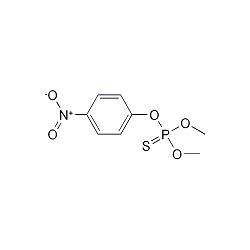 | 673653298-00-0 | 1×10 ml | Please log in |
ISO 17034 Certified Reference Material Parathion-methylConcentration: 100 µg/ml Solvent: Ethyl acetate | 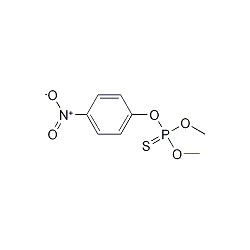 | 673654298-00-0 | 1×5 ml | Please log in |
ISO 17034 Reference Material Parathion-methyl | 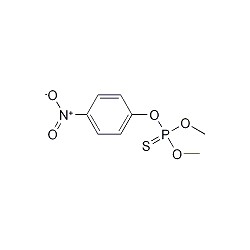 | 673951298-00-0 | 1×100 mg | Please log in |
ISO 17034 Certified Reference Material Parathion-methylConcentration: 100 µg/ml Solvent: Acetonitrile | 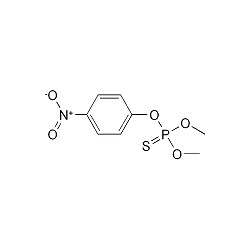 | 673952298-00-0 | 1×5 ml | Please log in |
ISO 17034 Certified Reference Material D6-Parathion-methylConcentration: 100 µg/ml Solvent: Acetone | 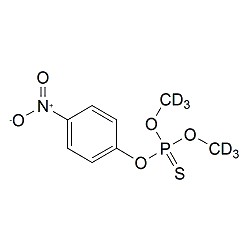 | 67686296740-32-8 | 1×1 ml | Please log in |
ISO 17034 Certified Reference Material D6-Parathion-methylConcentration: 100 µg/ml Solvent: Acetonitrile | 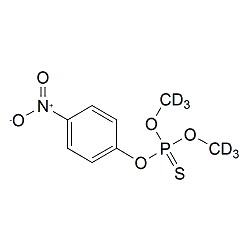 | 67750096740-32-8 | 1×1 ml | Please log in |
ISO 17034 Certified Reference Material Parathion-methyl | 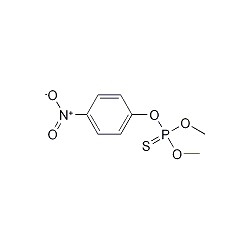 | 690630298-00-0 | 1×50 mg | Please log in |
Parathion-methyl
High-purity reference materials for accurate residue analysis
Overview
Parathion-methyl, also known as methyl parathion, is an organophosphate insecticide with the IUPAC name O,O-Dimethyl-O-p-nitrophenylphosphorothioate. It is structurally similar to parathion-ethyl and is used primarily in agricultural settings.
Its chemical formula is (CH3O)2P(S)OC6H4NO2, and it appears as a white to tan crystalline solid or powder with a pungent, garlic-like odor.
Uses
Parathion-methyl is used as an insecticide on various crops, including cotton. It is effective in controlling a wide range of insect pests.
Regulatory
Parathion-methyl is classified as Extremely Hazardous (Ia) by the World Health Organization and as Severely Hazardous by the Rotterdam Convention. It is not allowed for sale and import in nearly all countries, with a few exceptions under specified conditions.
Monitoring
Monitoring of parathion-methyl residues is essential for ensuring compliance with regulatory limits. Laboratories conducting food and environmental analysis rely on high-purity reference materials to achieve accurate and reliable results.
Health Impact
Parathion-methyl is an acetylcholinesterase inhibitor, leading to symptoms such as irritated eyes and skin, nausea, vomiting, abdominal pain, diarrhea, salivation, weakness, headache, runny nose, tightness in the chest, blurry vision, pupil constriction, irregular heartbeat, muscle twitches, and difficulty breathing.
Exposure can occur through inhalation, skin contact, ingestion, or eye contact. The National Institute for Occupational Safety and Health (NIOSH) recommends an exposure limit of 0.2 mg/m3 over an 8-hour workday.
Environmental Impact
Parathion-methyl has a low solubility in water (0.006% at 25°C) and a very low vapor pressure (0.00001 mmHg at 20°C). It is reactive with strong oxidizers and water, posing environmental hazards if not managed properly.
Safety Measure
Due to its high toxicity, strict safety measures must be followed when handling parathion-methyl. Personal protective equipment (PPE) such as gloves, masks, and protective clothing is essential to minimize exposure risks.
Analytical Standards
HPC Standards GmbH provides high-purity reference materials for parathion-methyl, ensuring accurate and reliable residue analysis. Our products are tested according to international quality requirements and meet the highest industrial standards, making them essential for laboratories conducting food and environmental analysis.