

Saflufenacil
High-Purity Saflufenacil Reference Materials for Accurate Residue Analysis
Ensure precise residue analysis in food and environmental samples with our high-purity Saflufenacil reference materials. HPC Standards GmbH provides top-quality standards that meet international requirements, essential for laboratories to maintain compliance with regulatory limits. Trust us for reliable and accurate results in your pesticide residue testing.
Filter
| Product | Image | Catalog No./ CAS No. | Quantity | Price |
|---|---|---|---|---|
| Saflufenacil | 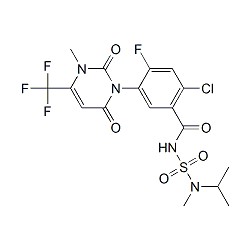 | 681160372137-35-4 | 1×100 mg | Please log in |
ISO 17034 Certified Reference Material SaflufenacilConcentration: 10.0 µg/ml Solvent: Acetonitrile |  | 681179372137-35-4 | 1×10 ml | Please log in |
ISO 17034 Certified Reference Material SaflufenacilConcentration: 100 µg/ml Solvent: Acetonitrile |  | 681180372137-35-4 | 1×1 ml | Please log in |
ISO 17034 Certified Reference Material SaflufenacilConcentration: 1000 µg/ml Solvent: Acetonitrile | 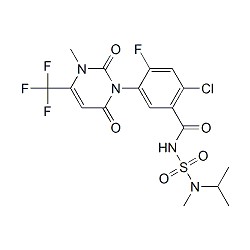 | 688709372137-35-4 | 1×1 ml | Please log in |
Saflufenacil Reference Materials
High-purity reference materials for precise residue analysis in food and environmental samples.
Overview
Saflufenacil, also known by its IUPAC name 2-Chloro-4-fluoro-5-[3-methyl-2,6-dioxo-4-(trifluoromethyl)-3,6-dihydropyrimidin-1(2H)-yl]-N-[methyl(propan-2-yl)sulfamoyl]benzamide, is an herbicide belonging to the pyrimidinedione chemical class. It is primarily used to control broadleaf weeds in crops such as soybeans and corn.
Uses
Saflufenacil is effective both pre- and post-emergence against a wide range of broadleaf weed species. It is used in crops including corn and soybeans and is also applied for crop desiccation pre-harvest. Typical application rates are around 0.1 lb active ingredient per acre.
Regulatory
In the United States, Saflufenacil is regulated by the Environmental Protection Agency (EPA) under the Federal Insecticide, Fungicide, and Rodenticide Act (FIFRA), the Food Quality Protection Act (FQPA), and the Pesticide Registration Improvement Act (PRIA). It is also registered for use in Australia but not in the European Union.
Monitoring
The estimated annual use of Saflufenacil in US agriculture was approximately 600,000 pounds (270,000 kg) in 2018, primarily in corn and soybean crops, according to the US Geological Service.
Health Impact
Human Toxicity
Saflufenacil has specific hazard statements including H410, indicating it is very toxic to aquatic life with long-lasting effects. Precautionary statements include P273 (avoid release to the environment), P391 (collect spillage), and P501 (dispose of contents/container in accordance with local/regional/national/international regulations).
Environmental Impact
Effects on Wildlife
As an herbicide, Saflufenacil can have significant impacts on non-target plant species and aquatic life due to its toxicity and persistence in the environment.
Safety Measures
Appropriate safety measures include avoiding release into the environment, collecting any spillage, and proper disposal according to regulatory guidelines.
Regulation
Saflufenacil can only be used legally according to the directions on the label that is included at the time of sale. This ensures compliance with regulatory standards and safe application practices.
Analytical Standards
HPC Standards GmbH provides high-purity reference materials for Saflufenacil, ensuring accurate and reliable residue analysis. These reference materials meet international quality requirements and the highest industrial standards, making them essential for laboratories conducting food and environmental analysis to ensure compliance with regulatory limits.