

Simazine
Ensure Accurate Residue Analysis with High-Purity Simazine Reference Materials
For laboratories conducting food and environmental analysis, precise and reliable results are paramount. HPC Standards GmbH offers high-purity Simazine reference materials, rigorously tested to meet international quality standards. Essential for monitoring compliance with regulatory limits, our Simazine standards help maintain the integrity of your testing processes. Trust HPC Standards GmbH as your competent partner in achieving accurate residue analysis.
Filter
| Product | Image | Catalog No./ CAS No. | Quantity | Price |
|---|---|---|---|---|
ISO 17034 Certified Reference Material SimazineConcentration: 100 µg/ml Solvent: Acetonitrile | 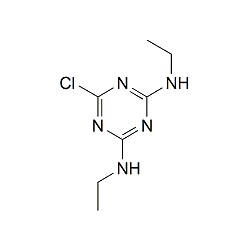 | 673441122-34-9 | 1×5 ml | Please log in |
ISO 17034 Reference Material Simazine | 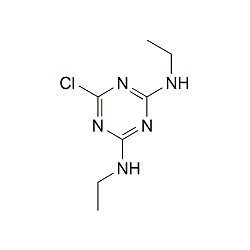 | 675426122-34-9 | 1×250 mg | Please log in |
ISO 17034 Certified Reference Material D10-SimazineConcentration: 100 µg/ml Solvent: Acetone | 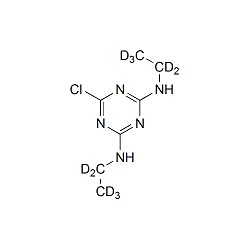 | 678058220621-39-6 | 1×1 ml | Please log in |
ISO 17034 Certified Reference Material SimazineConcentration: 100 µg/ml Solvent: Methanol | 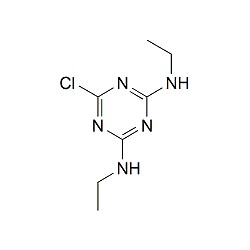 | 679465122-34-9 | 1×1 ml | Please log in |
| D10-Simazine | 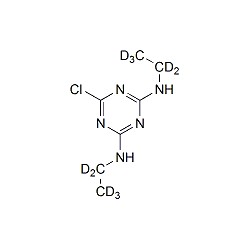 | 681190220621-39-6 | 1×10 mg | Please log in |
ISO 17034 Certified Reference Material Simazine | 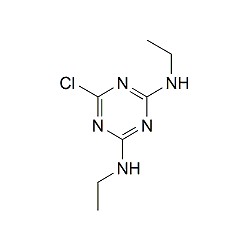 | 692639122-34-9 | 1×100 mg | Please log in |
Simazine
High-purity reference materials for accurate residue analysis in food and environmental samples.
Overview
Simazine is a chemical compound classified as an herbicide within the triazine class. Its IUPAC name is 6-Chloro-N2,N4-diethyl-1,3,5-triazine-2,4-diamine. It is primarily used to control broad-leaved weeds and annual grasses.
Simazine appears as a white crystalline powder with a chemical formula of C7H12ClN5 and a molar mass of 201.66 g/mol. It has a melting point of 225–227 °C and a density of 1.3 g/cm³. The compound is sparingly soluble in water but soluble in methanol, chloroform, and diethyl ether.
Uses
Simazine is widely used as a residual non-selective herbicide. It is applied to control broad-leaved weeds and annual grasses in various agricultural and non-agricultural settings. The compound inhibits photosynthesis, thereby preventing the growth of unwanted vegetation.
Regulatory
Simazine has been banned in European Union states due to environmental and health concerns. Regulatory bodies in other regions may have specific guidelines and limits for its use. Laboratories conducting residue analysis must ensure compliance with these regulatory limits.
Monitoring
Monitoring the presence of Simazine in food and environmental samples is crucial for ensuring compliance with regulatory standards. High-purity reference materials are essential for accurate and reliable residue analysis, helping laboratories maintain the integrity of their testing processes.
Health Impact
Exposure to Simazine can have various health impacts. It is essential to handle the compound with care and follow safety guidelines to minimize risks. Prolonged exposure may lead to adverse health effects, necessitating stringent monitoring and control measures.
Environmental Impact
Simazine remains active in the soil for two to seven months or longer after application. Its persistence in the environment can lead to contamination of water sources and adverse effects on non-target organisms. Proper management and disposal practices are crucial to mitigate its environmental impact.
Safety Measure
Handling Simazine requires adherence to safety protocols to prevent exposure. The synthesis of Simazine should be conducted in a fume hood due to the potential release of toxic gases like hydrogen chloride and hydrogen cyanide. Personal protective equipment (PPE) such as gloves and safety goggles should be worn at all times.
Analytical Standards
HPC Standards GmbH provides high-purity reference materials for Simazine, ensuring accurate and reliable residue analysis. Our products are tested according to international quality requirements and meet the highest industrial standards. These reference materials are essential for laboratories conducting food and environmental analysis to ensure compliance with regulatory limits.