

Sulfentrazone
Sulfentrazone: High-Purity Reference Materials for Precise Residue Analysis
Ensure the accuracy and reliability of your residue analysis with HPC Standards GmbH's high-purity reference materials for Sulfentrazone. Our products meet the highest industrial standards, making them essential for laboratories focused on food and environmental analysis. Trust in our expertise to help you comply with regulatory limits and achieve precise results.
Filter
| Product | Image | Catalog No./ CAS No. | Quantity | Price |
|---|---|---|---|---|
ISO 17034 Reference Material Sulfentrazone | 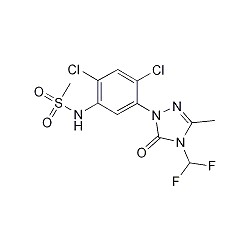 | 679199122836-35-5 | 1×100 mg | Please log in |
ISO 17034 Certified Reference Material SulfentrazoneConcentration: 10.0 µg/ml Solvent: Acetonitrile | 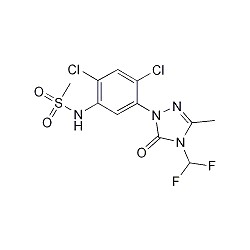 | 681185122836-35-5 | 1×10 ml | Please log in |
ISO 17034 Certified Reference Material SulfentrazoneConcentration: 100 µg/ml Solvent: Acetonitrile | 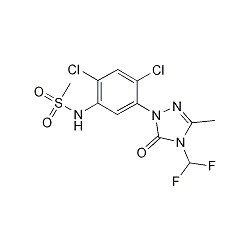 | 685791122836-35-5 | 1×1 ml | Please log in |
ISO 17034 Certified Reference Material Sulfentrazone | 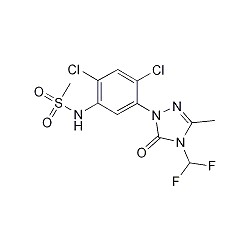 | 692494122836-35-5 | 1×50 mg | Please log in |
Sulfentrazone
High-purity reference materials for accurate residue analysis
Overview
Sulfentrazone is an organic compound used as a broad-spectrum herbicide. It acts by inhibiting the enzyme protoporphyrinogen oxidase, leading to the accumulation of protoporphyrin IX in plant cells, which causes chlorosis and desiccation.
Uses
Sulfentrazone is used to control sedges and newly emerged broadleaf weeds, including purple and yellow nutsedge, Kyllinga, plantain, clover, spurge, woodsorrel, knotweed, chickweed, curly dock, wild onion, and wild garlic. It is also effective on many grasses such as Poa annua, Poa trivialis, creeping bentgrass, fine & tall fescue, perennial ryegrass, Kentucky & rough bluegrass, bahiagrass, Bermuda grass, buffalograss, carpetgrass, centipedegrass, kikuyugrass, seashore paspalum, St. Augustine grass, and zoysiagrass. Sulfentrazone can be used both pre- and post-emergence and is rapidly metabolized by soybean, providing a level of safety to that crop.
Regulatory
In the United States, the Environmental Protection Agency (EPA) regulates sulfentrazone under the Federal Insecticide, Fungicide, and Rodenticide Act (FIFRA), the Food Quality Protection Act (FQPA), and the Pesticide Registration Improvement Act (PRIA). Sulfentrazone is not registered for use in the European Union.
Monitoring
The estimated annual use of sulfentrazone in US agriculture is mapped by the US Geological Service. In 2017, approximately 3,800,000 pounds (1,700,000 kg) were applied, mainly in soybean.
Health Impact
Human Toxicity
The LD50 of sulfentrazone is more than 2800 mg/kg (rats, oral), indicating low toxicity by oral ingestion. The US Code of Federal Regulations records the maximum residue tolerances in various food products.
Environmental Impact
Effects on Wildlife
Sulfentrazone can affect non-target plants and aquatic organisms due to its herbicidal properties. Proper application and adherence to safety guidelines are crucial to minimize environmental impact.
Safety Measures
Products containing sulfentrazone come with labels that provide clear directions for effective product performance while minimizing risks to human health and the environment. These labels are legally binding documents that must be followed precisely.
Analytical Standards
HPC Standards GmbH provides high-purity reference materials for sulfentrazone, ensuring accurate and reliable residue analysis. Our products meet the highest industrial standards and are essential for laboratories conducting food and environmental analysis to ensure compliance with regulatory limits.