


Thidiazuron
High-Purity Thidiazuron Reference Materials for Precise Residue Analysis
Ensure accurate and reliable residue analysis with our high-purity Thidiazuron reference materials. Tested to meet the highest industrial standards, our products support food and environmental laboratories in maintaining compliance with regulatory limits. Trust HPC Standards GmbH for your Thidiazuron analytical needs.
Filter
| Product | Image | Catalog No./ CAS No. | Quantity | Price | |
|---|---|---|---|---|---|
ISO 17034 Reference Material Thidiazuron | 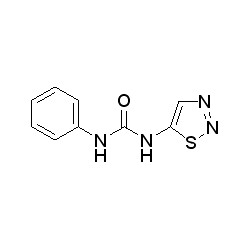 | 67292551707-55-2 | 1×250 mg | Please log in | |
ISO 17034 Certified Reference Material ThidiazuronConcentration: 10.0 µg/ml Solvent: Acetonitrile | 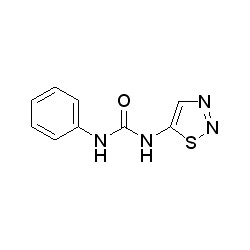 | 68147951707-55-2 | 1×10 ml | Please log in | |
ISO 17034 Certified Reference Material ThidiazuronConcentration: 100 µg/ml Solvent: Acetonitrile | 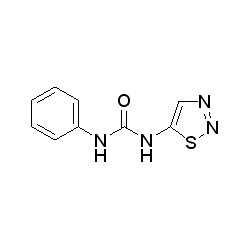 | 68148051707-55-2 | 1×5 ml | Please log in | |
ISO 17034 Reference Material D5-Thidiazuron | 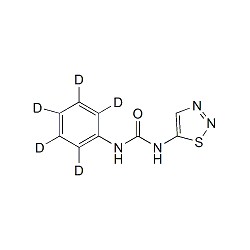 | 689030 | 1×10 mg | Please log in | |
ISO 17034 Reference Material 13C6-Thidiazuron | 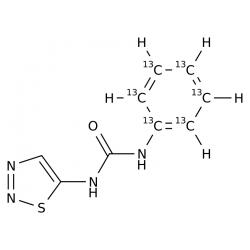 | 692854 | 1×10 mg | on request | |
ISO 17034 Certified Reference Material 13C6-ThidiazuronConcentration: 100 µg/ml Solvent: Acetonitrile | 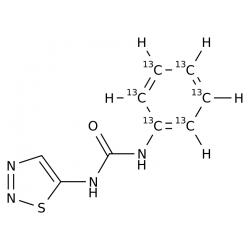 | 692855 | 1×1 ml | on request | |
Thidiazuron Reference Materials
Ensure precise residue analysis with our high-purity Thidiazuron reference materials, meeting the highest industrial standards.
Overview
Thidiazuron (TDZ) is a plant growth regulator with the IUPAC name 1-Phenyl-3-(1,2,3-thiadiazol-5-yl)urea. It is used primarily to facilitate mechanical harvesting by causing leaves to lose weight and accelerate maturation.
Uses
Thidiazuron is employed in agriculture to assist in the harvesting process by promoting leaf drop and maturation. It is also used as a preservative for extending the life of cut flowers by preventing wilting.
Regulatory
In 2008, the European Union banned the use of Thidiazuron in agriculture under the European Pesticides Directive 91/414/EEC. However, it is still used in other regions such as the United States, Australia, and Mexico.
Monitoring
Regular monitoring and analysis of Thidiazuron residues are essential for compliance with regulatory limits and ensuring environmental and food safety.
Health Impact
Human Toxicity
Thidiazuron is mildly acutely toxic, can irritate the skin and eyes, and may cause respiratory irritation if inhaled.
Environmental Impact
Effects on Wildlife
While specific data on the environmental impact of Thidiazuron on wildlife is limited, it is crucial to follow safety measures to minimize potential negative effects.
Safety Measures
Proper handling and usage of Thidiazuron are necessary to avoid skin and eye irritation and respiratory issues. Personal protective equipment (PPE) should be used when handling the substance.
Analytical Standards
HPC Standards GmbH provides high-purity Thidiazuron reference materials that are tested according to international quality requirements, ensuring accurate and reliable residue analysis for food and environmental laboratories.